What to Do Before the Plumber Arrives: A Homeowner's Emergency Checklist
A few calm steps in the first few minutes can protect your floors, your belongings, and your family while help is on the way.
October 1, 2026 · 4 min read
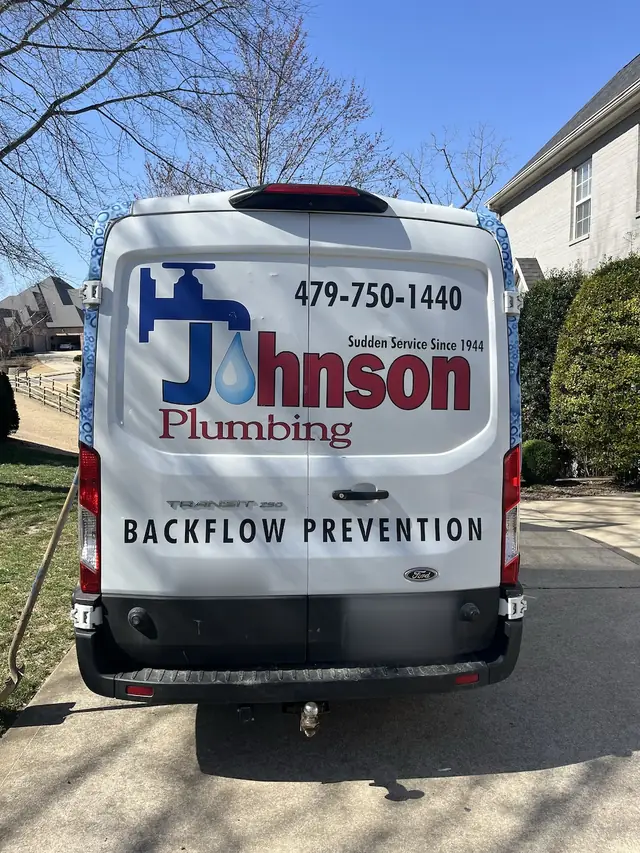
Plumbing emergencies rarely pick a good time. A supply line lets go late at night, a drain backs up during a weekend gathering, or a water heater fails right before the workday starts.
The minutes between noticing the problem and the plumber arriving are when you can do the most good. This guide covers what counts as an emergency, what to tell the plumber when you call, and six steps that help limit damage while you wait. Johnson Plumbing answers emergency calls 24/7 across Northwest Arkansas, and these are the same steps its team would walk you through.
What counts as a plumbing emergency
A plumbing emergency is any situation where waiting could cause water damage, a health risk, loss of essential water service, or an unsafe condition. If water is actively leaking, sewage is backing up, or you cannot use your plumbing safely, treat it as urgent. These situations qualify:
- Burst or leaking pipes releasing water into walls, ceilings, floors, cabinets, or crawl spaces
- Sewer backups, where wastewater comes up through drains, tubs, showers, or toilets
- Toilets that overflow and will not stop running or cannot be cleared with basic steps
- Major clogs that affect several fixtures at once
- Water heater failures involving leaks, no hot water, odd noises, or water around the tank
- Sump pump problems during heavy rain or rising groundwater
- Broken shutoff valves that prevent you from stopping the flow of water
- Frozen or cracked pipes that threaten to burst or have already started to leak
- A gas smell, if your system includes gas piping
If you are not sure whether your situation qualifies, call anyway. A plumber can help you decide whether it needs immediate service or can wait for an appointment.
Gas comes first, and it is different
If you smell gas or suspect a gas leak, do not follow the water steps below. Leave the area and call your gas utility's emergency service first. Once the area is safe, contact a qualified plumbing professional for the repair.
The same goes for any situation with electrical risk, contaminated water, or structural damage. Move away and call the appropriate emergency services.
Six steps before the plumber arrives
Only take these steps if it is safe to do so. They reduce damage and make the service call go faster, but they are not a substitute for a professional repair.
- Shut off the water if possible. Use the valve nearest the leaking fixture, or the main shutoff if water is spreading. Knowing where your main shutoff is before an emergency is one of the best things a homeowner can do.
- Avoid using the affected fixtures. Do not flush toilets, run sinks, or use appliances connected to a leaking or backed-up line. Every flush or load of laundry sends more water to the place you are trying to stop.
- Move belongings away from the water. Rugs, electronics, stored boxes, and furniture are easier to save if you get them out of the way early. Do this only if you can do it safely, and keep clear of any standing water near outlets or cords.
- Take note of where the problem started. Which fixture, room, or pipe showed the first sign? That detail helps the plumber find the source faster, and it is easy to forget once the stress sets in.
- Keep children and pets away. Standing water, sewage, and wet floors are slipping and sanitation hazards, and wastewater in particular should be avoided.
- Do not use harsh chemical drain cleaners. They can damage pipes and create risks for anyone who later works on the drain. If a drain is badly clogged, leave it for the plumber.
That last one surprises people, because reaching for a bottle of drain cleaner feels like the responsible thing to do. In an emergency, it can make the situation harder to fix and less safe to work on.
What to tell the plumber when you call
You do not need to diagnose anything. Describe what you see, hear, or smell. It helps to have these details ready:
- Your address, and the town you are in
- The kind of problem: a leak, a clog, a backup, or no hot water
- Whether water is actively flowing or spreading
- Which fixtures are affected, and whether more than one drain or room is involved
- Anything you have already done, such as closing a valve
Our emergency line is answered 24/7. The office itself keeps regular hours, Monday through Friday, 8:00 AM to 5:00 PM, but urgent calls go through any time of the day or night. If you have a plumbing emergency anywhere in Springdale, Fayetteville, Rogers, Bentonville, or nearby, call Johnson Plumbing at (479) 750-1440.
Johnson Plumbing, (479) 750-1440
Call (479) 750-1440More articles
5 Signs You Need to Call a Plumber Before a Small Problem Gets Worse
Most big plumbing repairs start as something small that was easy to ignore, and these five signs are worth acting on early.
7 Signs Your Water Heater Needs Repair or Replacement in Springdale, AR
Most water heaters give warnings before they quit, and knowing them can keep a small repair from turning into a flooded garage.